Your knowledge of your community has valueJoin as a contributor
GolokaBook a Call
Goloka Data & Intelligence

Turn scattered
data into a
clearer view.

Goloka combines existing structured data with fresh evidence from people and places to help you understand markets, communities, infrastructure and operating conditions more clearly.

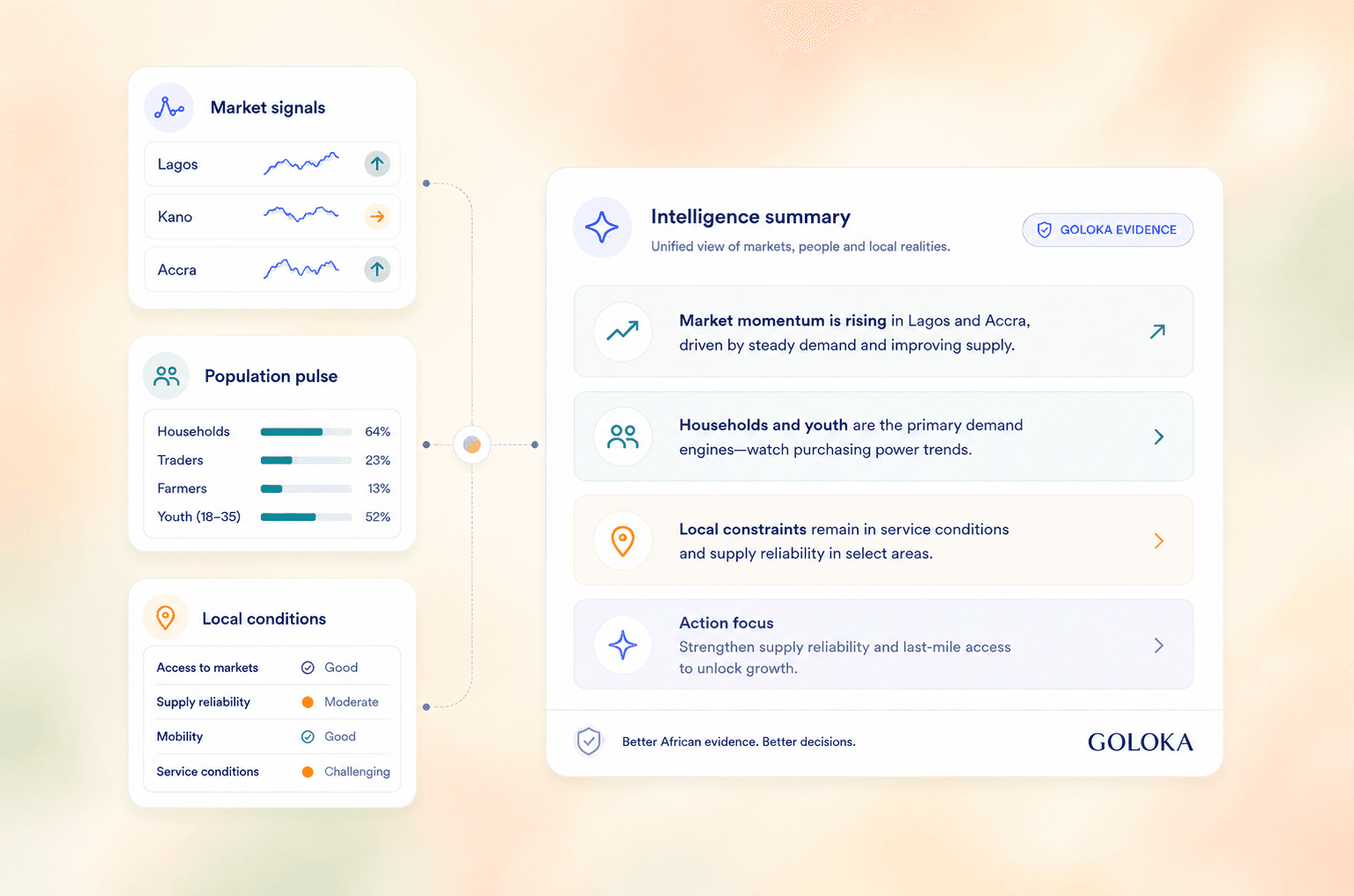
Goloka intelligence dashboard Connected intelligence
Start with the decision

Tell us what you are trying to decide.

Decision categories in a Goloka intelligence product

You may be assessing a market, choosing where to invest, monitoring risk, comparing locations, planning a programme or trying to understand why an indicator changed.

We start with the decision rather than the dataset.

First, we identify what evidence would actually help you make that decision. We then look at what data already exists, where the gaps are and whether fresh collection from the ground would add value.

We start with the decision rather than the dataset.


How we build intelligence

We use what is already known before asking you to pay for new data.

We review the evidence that already exists, assess what is reliable and identify the gaps that still matter.

Get Started with Goloka
Step 1

You define the question.

Tell us the decision, programme, sector or population you need to understand.

Step 2

We review the available evidence.

We identify relevant existing data and assess whether it is current, detailed and reliable enough for the question.

Step 3

We identify what is missing.

Where the existing evidence cannot answer the question, we define the specific information gap.

Step 4

We collect fresh ground evidence where required.

Goloka Collect, Verify or Panels can be used to fill the missing information rather than commissioning an entirely separate research process.

Step 5

We connect the evidence.

We organise relevant information around geography, time and other appropriate identifiers so different sources can be compared meaningfully.

Step 6

You receive intelligence in a useful format.

Depending on the requirement, this can be delivered through datasets, dashboards, recurring reports, alerts, APIs or analyst-supported outputs.

Intelligence areas

See what's changing across the systems that matter.

Explore the intelligence behind your next decision.

Choose an area to see how Goloka connects existing data with fresh ground evidence.

Get started
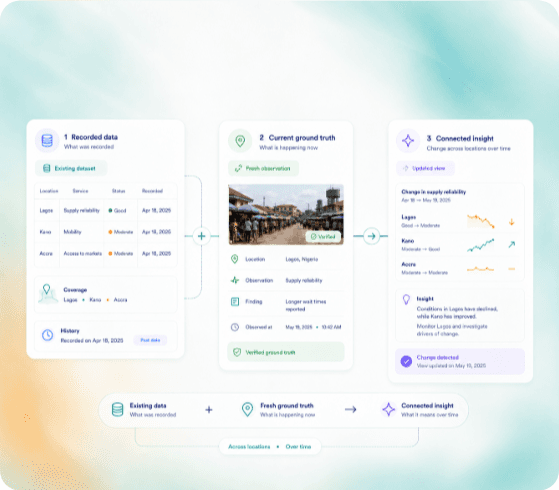
Existing data plus fresh ground truth

A dataset can tell you what was recorded. Ground truth can tell you what is happening now.

When the rights and methodology allow it, we can connect new observations with existing data so you can analyse change across locations and over time.

Explore Infrastructure Intelligence
Connected field and structured intelligence
Ways to work with the data

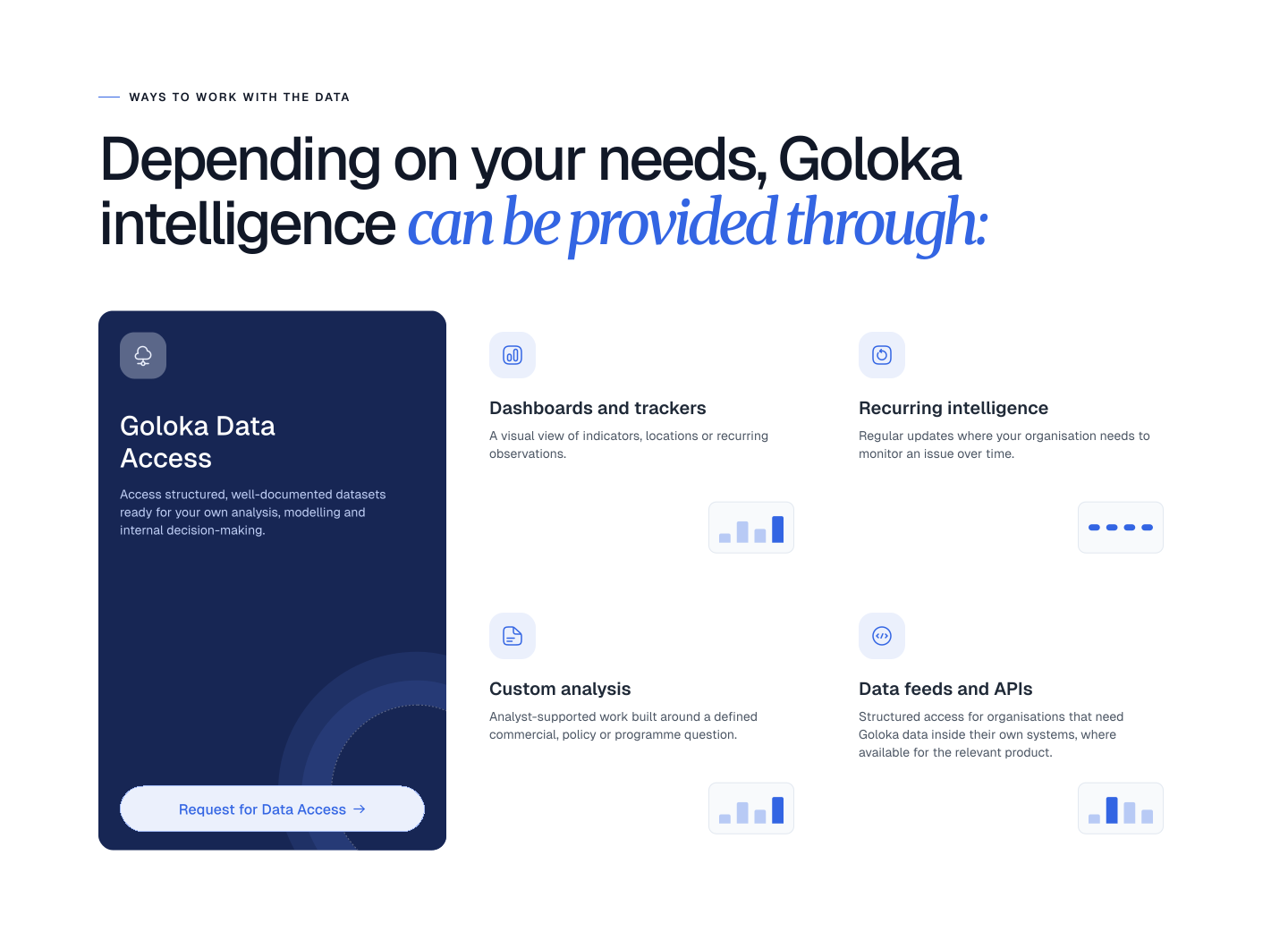
Depending on your needs, Goloka intelligence can be provided through:

Dashboards and trackers

A visual view of indicators, locations or recurring observations.

Recurring intelligence

Regular updates where your organisation needs to monitor an issue over time.

Custom analysis

Analyst-supported work built around a defined commercial, policy or programme question.

Data feeds and APIs

Structured access for organisations that need data integrated into their own systems.

Questions clients commonly ask

What clients need to know before Data Access begins.

No. We begin by reviewing the information you already have and only recommend new collection where an important evidence gap remains.

Yes. Subject to permissions and compatibility, we can combine internal records with Goloka datasets and newly commissioned evidence.

Yes. Intelligence products can be structured as recurring updates, trackers or repeat studies rather than one-off reports.

Yes. Share the decision you need to make and we will assess available evidence, feasibility and the best delivery format.

Reach out to our team

What decision are
you trying to make?

Tell us what you need to understand and what evidence you already have. We will help you identify what is known, what is missing and the most practical way to close the gap.

Browse Data Catalogue