You define the population and the change you want to measure.
Tell us who you want to follow, where they are and how often you expect to contact them.

Some questions cannot be answered properly in one survey. Goloka helps you build and manage groups of consenting participants who can take part in research over time, allowing you to understand how behaviours, experiences and conditions change from one round to the next.
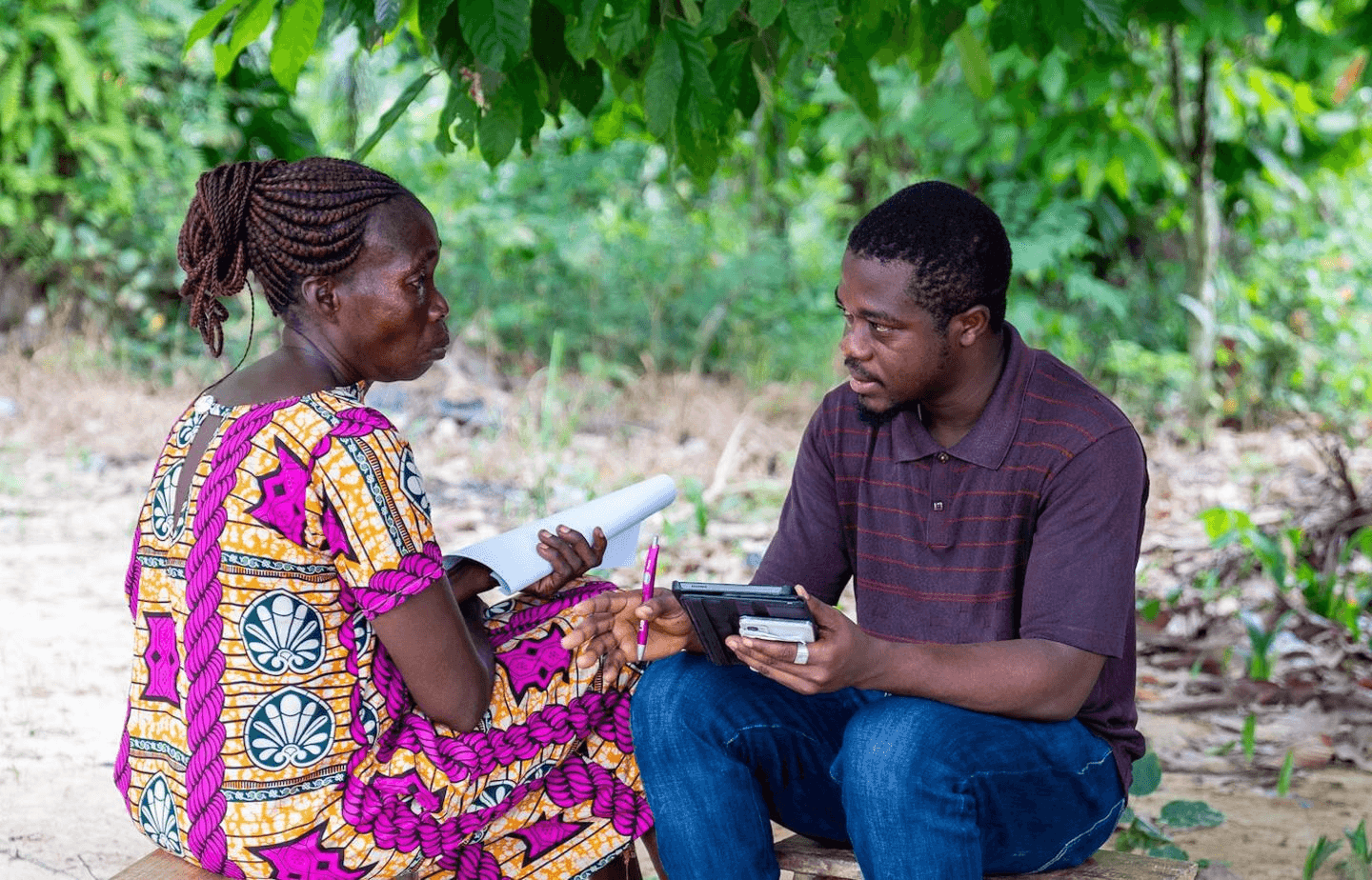
Repeated recruitment takes time and can make it hard to tell whether changes in your results come from the population itself or from speaking to a different group of people.
Panel-managed participants give you the same starting point. That can help you study change, test new questions and build a deeper picture of the people your programmes, product or policy affects.
 Round 01Participant A
 Round 02Participant B
 Round 03Group C

From farmers and households to businesses, language communities and civic observers, we can build and manage permissioned cohorts around your research needs.

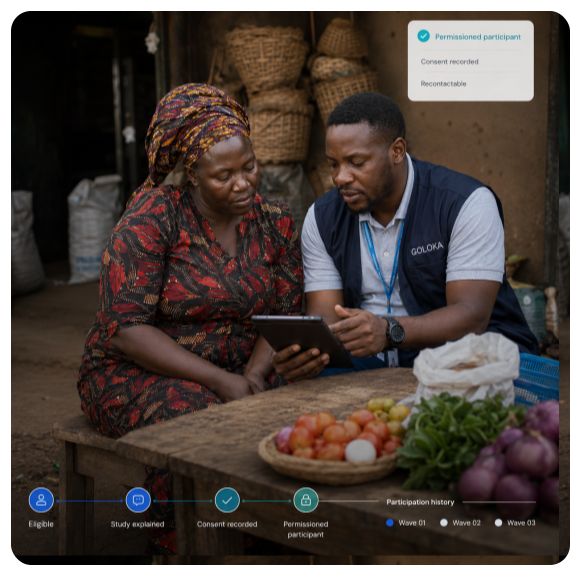
Having someone's contact details does not automatically make them a research panel member.
For every panel engagement, we identify who is eligible, explain what participation involves and obtain the appropriate consent for the study and any planned recontact.
We also manage the relationship over time, including participation history, research frequency and panel engagement.
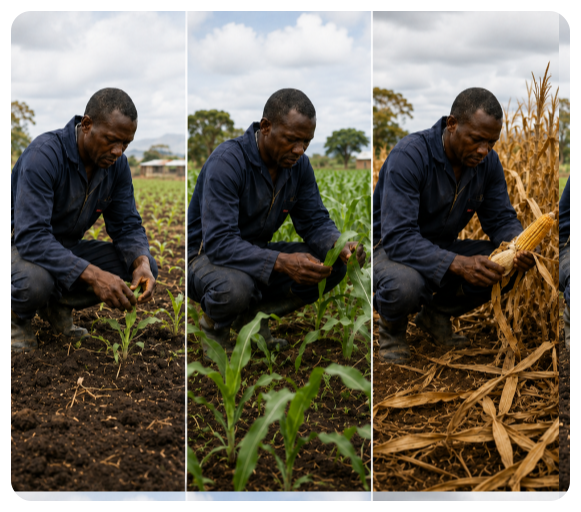
A single verification tells you what was observed on a particular day. Repeat verification can tell you whether an asset remained functional, whether a programme progressed or whether local conditions changed.
Where the engagement allows it, we structure observations so they can be linked to the same asset or place over time rather than treated as unrelated field visits.
Get Started with GolokaTell us who you want to follow, where they are and how often you expect to contact them.
We assess existing profiles and networks and determine whether the required participants are available or need to be recruited.
We identify suitable participants and explain the research requirements to them.
Participants agree to the research study and, where required, to being contacted again for future research rounds.
We coordinate participation, monitor response behaviour and manage the practical challenges that come with repeated research.
Where the methodology requires it, responses can be linked across research rounds without unnecessarily exposing participant identity.
Repeated research reveals patterns, shifts and behaviours that one survey cannot show.
Goloka maintains permissioned networks and can also recruit a purpose-built panel where the required population, geography or profile is not already available.
Yes. We can define the recruitment criteria, consent model, participant profile and recontact process around your research programme.
Contact arrangements depend on the consent and governance model agreed for the panel. We design this clearly before recruitment begins.
Where the study requires it, we can design quotas and sampling around relevant population benchmarks, subject to feasibility and coverage.
Tell us the population, locations, study frequency and questions you expect to explore. We will assess the available reach and recommend an appropriate panel approach.
Talk to our team