 Who
WhoTarget population
Define the people, groups or participants the study needs to reach.


Trust & Methodology
Before we collect anything, we agree with you what valid evidence looks like, how it should be collected and how it will be checked.
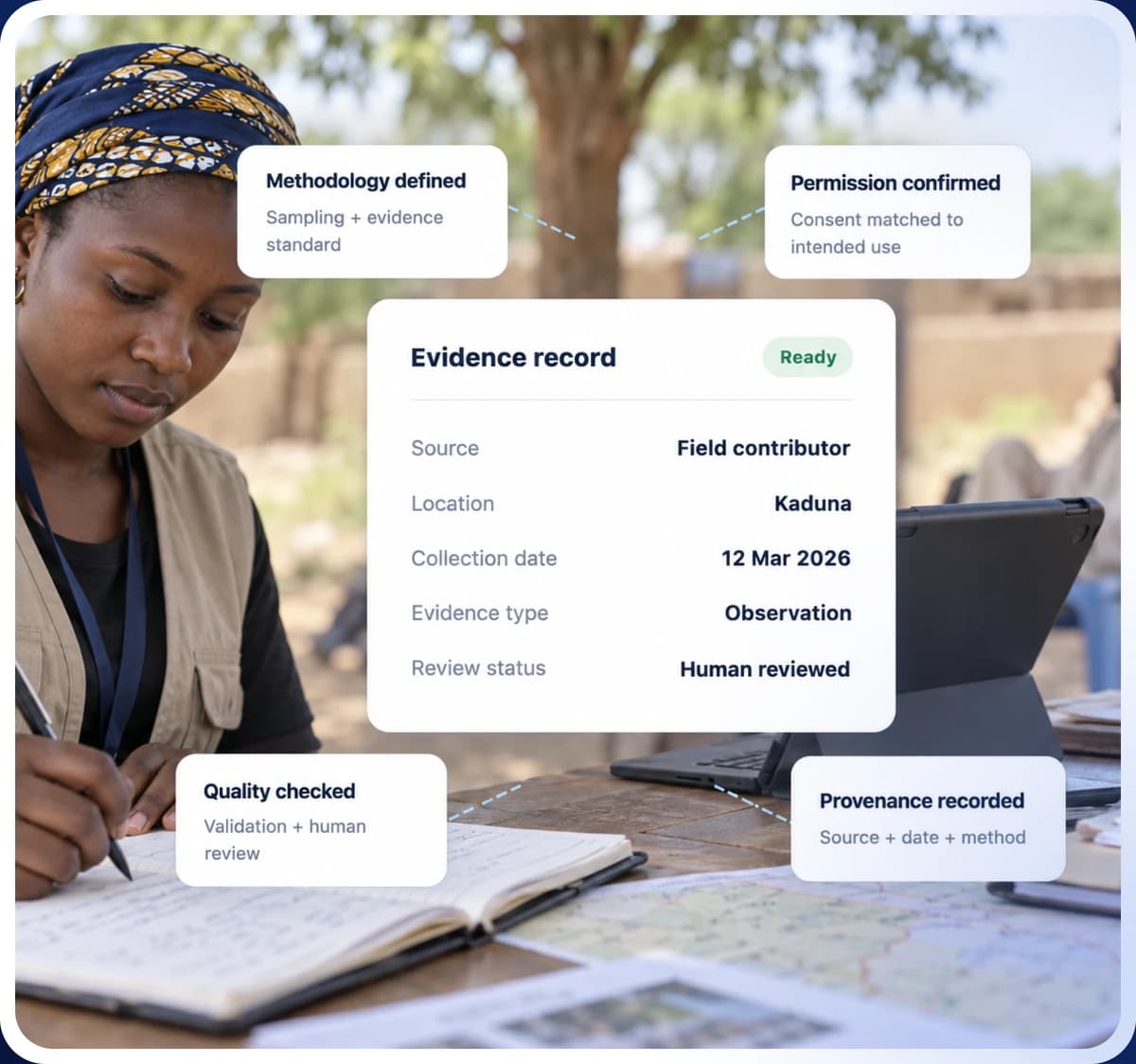
Methodology that fits the question
We agree on the research approach around what you are actually trying to learn.
WhoDefine the people, groups or participants the study needs to reach.
 Where
WhereSet the locations, communities or areas the research should cover.
 Selection
Decide how participants, locations or observations should be selected.
 Questions
Design the questions, prompts or tools used to collect the required evidence.
 Evidence
Define the information or supporting proof that needs to be captured.
 Validation
Set the validation and review checks used to assess the quality of submissions.
 Permission
Ensure participants understand the study and consent matches the intended use.
 Output
Agree how the final data or findings should be structured and delivered.
 Collection
Define how and when evidence should be collected.
Quality assurance
The right combination depends on what you are collecting.
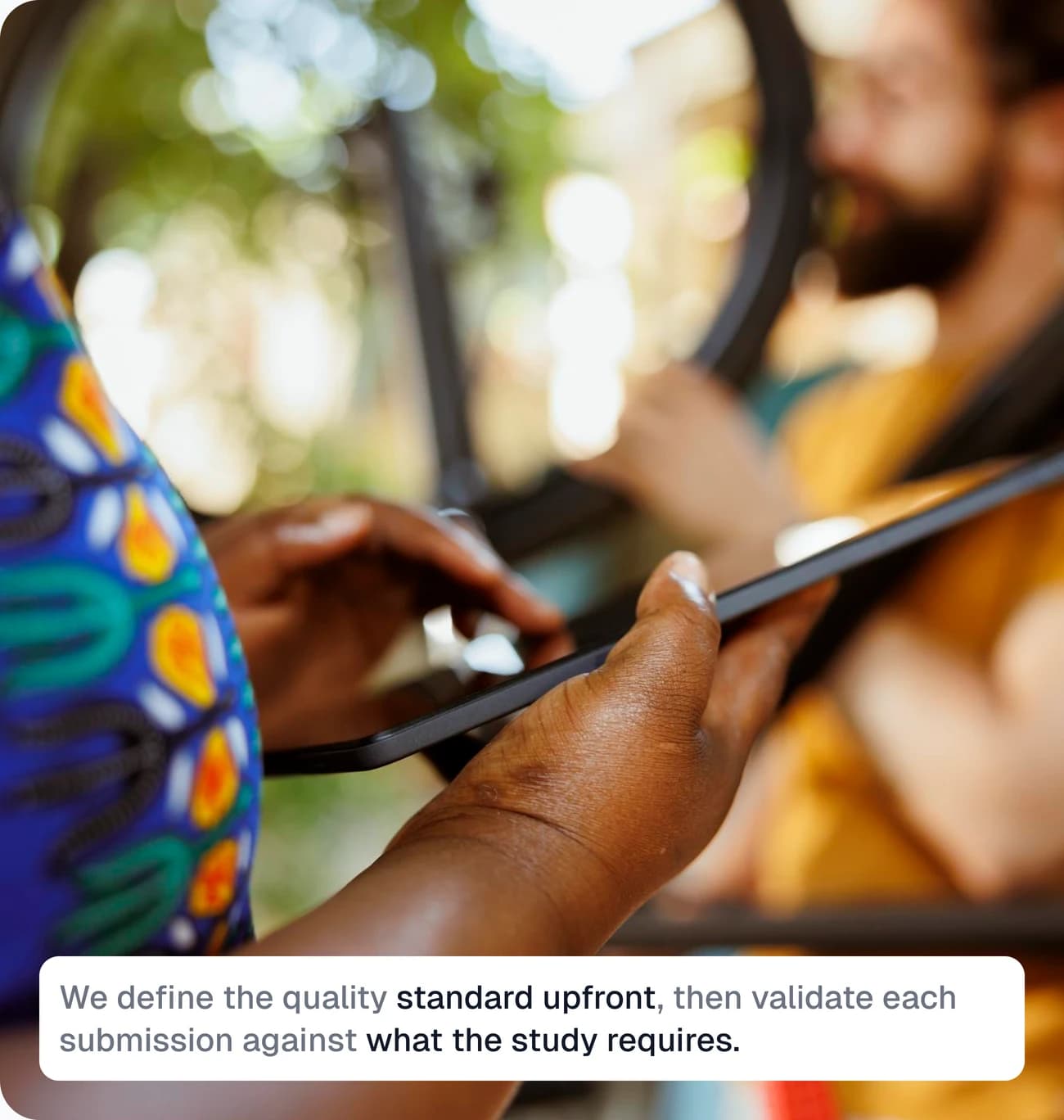
We define the quality standard upfront, then validate each submission against what the study requires.
Consent
Taking part in one study does not automatically mean someone has agreed to every future use of their data. Repeat research, AI-related data and other uses are handled according to the permissions required for that engagement.

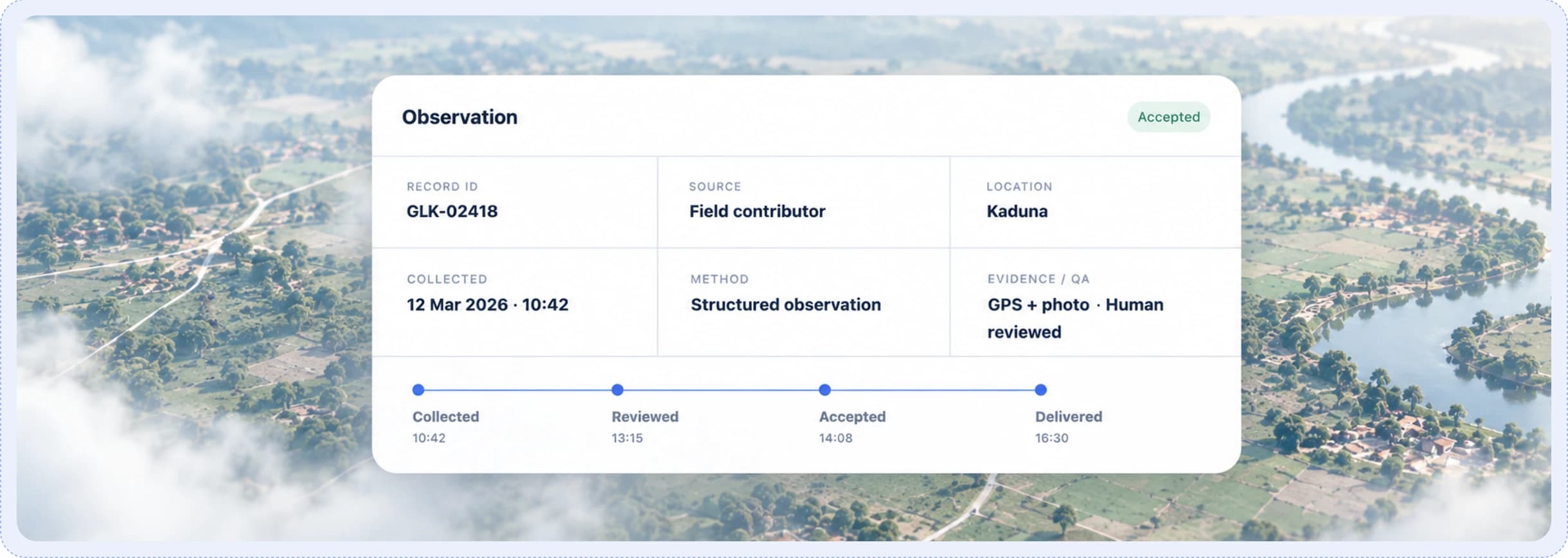
Data provenance
Where relevant, we document how the information was collected, when it was collected, its source and the quality checks applied.
Responsible fieldwork
We consider the safety of contributors and respondents when designing fieldwork. Where a location or subject creates unnecessary risk, we change the approach or tell you the assignment is not feasible.
Use the agreed method, safeguards and evidence requirements to collect responsibly.
Where fieldwork creates unnecessary risk, use remote interviews, existing data, local respondents or alternative evidence.
We adapt the research method to the level of risk so evidence can be collected safely and responsibly.
Do not deploy where the risk cannot be reduced to a level that allows the work to proceed safely and responsibly.
Tell us the geography, issue and type of change you want to monitor.
Talk to our team